
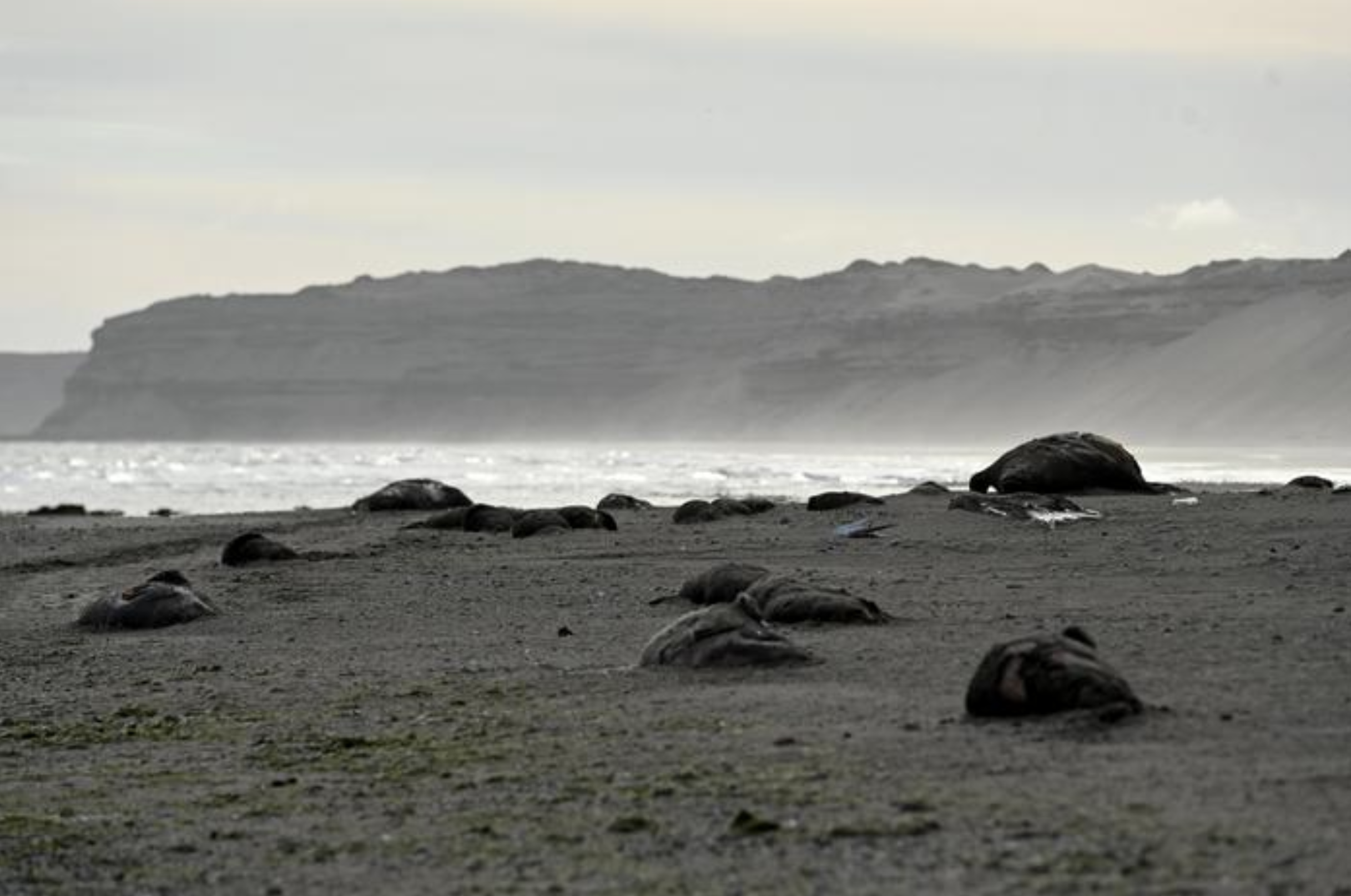
The H5N1 bird flu virus has adapted to spread to marine mammals, threatening wildlife conservation efforts, according to a new study from the University of California, Davis, and the National Institute of Agricultural Technology (INTA) in Argentina.
Researchers collected brain tissue samples from four sea lions, one fur seal and a tern found dead at the most affected sea lion rookery on the Atlantic shore of Argentina, and all tested positive for the highly pathogenic H5N1 avian influenza virus.
Genome sequencing showed the virus collected from the samples shared mammal-adaptation mutations previously found in a few sea lions in Peru and Chile, and in a human case in Chile.